Muv Wheelchair
Muv Wheelchair
Muv Wheelchair
The global electric wheelchair market is undergoing a seismic shift. As the world’s population continues to age—particularly in North America, Europe, and East Asia—the demand for advanced mobility solutions is no longer a luxury but a necessity. By 2030, it is estimated that the geriatric population will drive a 7.5% CAGR in the assistive technology sector. Professional electric wheelchair suppliers and exporters are now focusing on more than just "movement"; they are integrating ergonomics, battery efficiency, and smart connectivity into every unit.
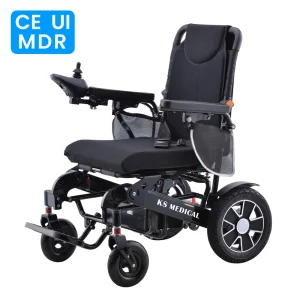
From a commercial perspective, the industry has transitioned from heavy, steel-framed chairs to ultra-lightweight magnesium and carbon fiber alloys. This evolution is driven by the global need for travel-friendly devices. Enterprises ranging from medical device distributors in Dubai to rehabilitation centers in New York are seeking partners who can offer reliable, certified, and high-performance equipment that meets stringent international standards like FDA and CE MDR.
The shift from lead-acid to high-capacity lithium-ion batteries has extended the travel range of motorized chairs to over 25km per charge.
AI-assisted braking and remote-control folding mechanisms are becoming standard in premium export models.
China has solidified its position as the world's primary manufacturing hub, producing over 60% of the world's power mobility devices.
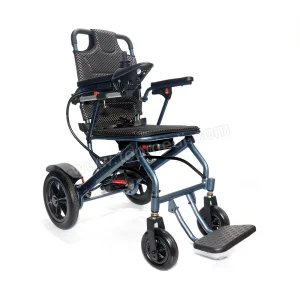
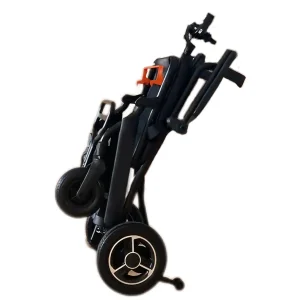
Innovation in the electric wheelchair sector is currently defined by three major pillars: Portability, Intelligence, and Customization. Modern users demand equipment that fits into a car trunk and can be operated via smartphone apps. As a top-tier factory, we stay ahead of these trends by incorporating brushless motor technology, which offers quieter operation and higher energy efficiency compared to traditional brushed motors.
Procurement departments for international hospitals, nursing homes, and government health agencies have specific criteria when selecting electric wheelchair exporters. They prioritize durability, ease of maintenance, and compliance with local healthcare regulations. For instance, European clients strictly require MDR (Medical Device Regulation) certification, while the North American market focuses on FDA approval and rigorous crash-test data.
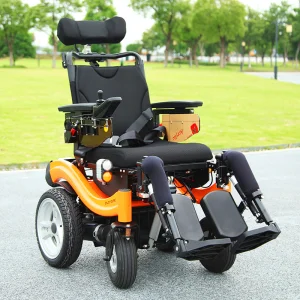
Localized application scenarios vary significantly. In urban centers like London or Tokyo, the focus is on compact, narrow-frame wheelchairs for navigating public transport and elevators. Conversely, in regions with more rugged terrain, high-torque motors and shock-absorbing suspension systems are prioritized. As a specialized manufacturer, we provide OEM/ODM services to tailor our products to these specific regional requirements.
Bulk procurement for rehabilitation centers focusing on ergonomic seating and pressure relief technology.
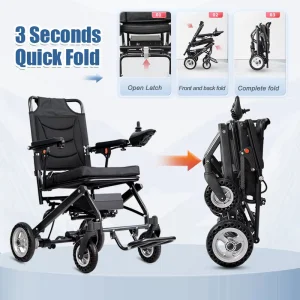
Lightweight, foldable models for Amazon and specialized medical e-shops targeting the end consumer directly.
High-durability models designed for public welfare programs and veteran mobility support.
Choosing the right electric wheelchair supplier is a decision that impacts the quality of life for users worldwide. Located in the heart of China's industrial hub, Foshan Wheelchair Report Co., Ltd. combines advanced robotics with human-centric design. Our factory isn't just a production line; it's an R&D powerhouse where mobility is reimagined every day.
Foshan Wheelchair Report Co., Ltd. self-owned factory covers an area of 10,000 square meters. We have strong research and development capabilities and superior manufacturing capabilities, and we hold independent intellectual property rights for a number of products.

Electric wheelchairs, medical beds, scooters, and related medical equipment.
Suitable for people with disabilities or mobility difficulties.
Automatic equipment, robotic arms, etc.
We currently hold 25 technology patents and 2 software copyrights. We have passed system assessments including ISO9001:2008 and ISO13485:2016. We have obtained CCC, CE, MDR, FDA, and other international certifications.
Our products have been exported to Europe, America, the Middle East, and other regions, covering approximately 48 countries worldwide.