Muv Wheelchair
Muv Wheelchair
Muv Wheelchair
Explore our engineering capability through high-precision manufacturing configurations tailored for modern healthcare markets.
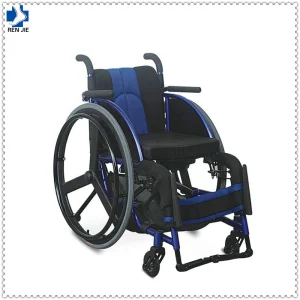
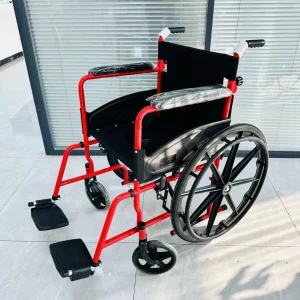
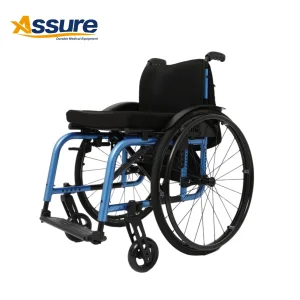
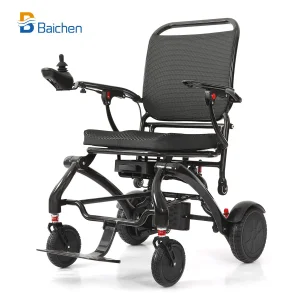
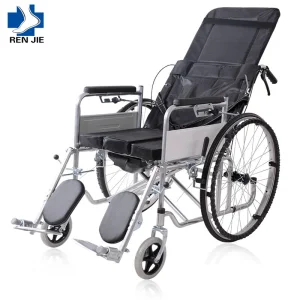
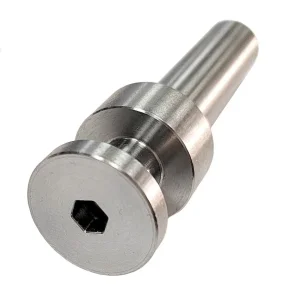
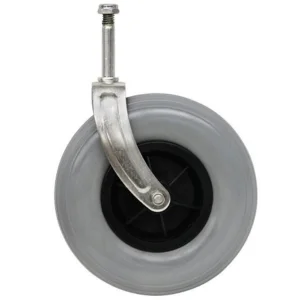
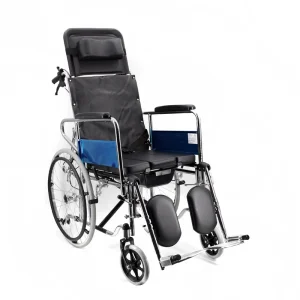
As the healthcare landscape moves towards localized patient management systems and specialized occupational therapy designs, the demand for high-utility seating systems has risen exponentially. At Foshan Muv Wheelchair Co., Ltd., we serve as a leading OEM/ODM strategic partner and dedicated manufacturer specializing in high-performance mobility and rehabilitation systems. Operating from our state-of-the-art 10,000-square-meter facility, we integrate heavy industrial manufacturing capability with rigorous clinical validation.
Our core manufacturing philosophy centers on the elimination of structural inefficiencies that traditional wheelchair structures impose during patient transfers. By leveraging advanced kinematic engineering and structural metallurgy, our team builds custom swivel and multi-axis rotational wheelchairs designed to support complex transfer angles, reducing physiological stress on both patient and caregiver. Our dedication is backed by 25 technology patents and 2 software copyrights, ensuring that every design is protected and clinically progressive.
"By developing high-tensile, 360-degree rotational hubs and pairing them with high-precision CNC machined interfaces, Muv Wheelchair defines the modern standard for clinical and domestic patient mobility."
Our manufacturing and engineering practices are compliant with strict medical quality protocols. We carry operational certifications including:
A technical assessment of structural load paths, rotational mechanisms, and stability engineering in swivel wheelchairs.
Traditional manual and electric wheelchairs operate along a fixed forward-facing axis. While efficient for linear motion, this configuration compromises accessibility in confined configurations. A custom swivel wheelchair addresses this constraint by introducing a secondary rotating axis beneath the seating system, allowing the seat to rotate up to 360 degrees independently of the wheel base. This design is highly beneficial in domestic setups, specialized vehicles, and physical rehabilitation centers.
The core structural element of our swivel mechanism is a dual-race, heavy-duty turntable bearing system. We use precision-engineered ball bearing assemblies housed in high-grade structural aluminum or carbon steel alloys. This configuration achieves high axial and radial load capacity while maintaining low torque requirements for rotation. The bearing assembly is fully sealed against moisture, dust, and sanitizing chemicals commonly used in clinical environments, ensuring long-term maintenance-free operation.
| Engineering Attribute | Standard Configuration | Reinforced / Heavy Duty Option | Clinical / Wet Area Option |
|---|---|---|---|
| Bearing Type | Sealed Single-Race Ball Bearing | Sealed Dual-Race Turntable Bearing | Corrosion-Resistant Polymer/Ceramic Hybrid |
| Axial Load Rating | Up to 150 kg (330 lbs) | Up to 250 kg (550 lbs) | Up to 180 kg (396 lbs) |
| Rotational Friction Torque | < 2.5 N·m | < 4.0 N·m | < 3.0 N·m |
| Materials Utilized | 6061-T6 Aircraft Aluminum | SCM440 Chromoly Steel Alloys | SUS316 Marine Grade Stainless Steel |
| Locking Positions | 4-Point Indexing (90° increments) | 8-Point Indexing (45° increments) | Infinitely Variable Friction Brake |
Adding a swivel mechanism raises the patient’s center of gravity (CoG) by approximately 15mm to 35mm. To offset this alteration and maintain stability under ISO 7176 dynamic testing standards, our research and development team redesigned the frame structure. By using Finite Element Analysis (FEA) modeling, we reinforce the primary structural nodes of our lightweight aluminum and carbon steel tubing frames, redistributing vertical loads away from the swivel point and directly down to the caster assemblies.

How customized swivel designs solve daily accessibility and caregiver challenges globally.
In high-density urban settings across Europe and Asia, home interiors feature narrow hallways and small bathrooms. A custom swivel manual or electric wheelchair allows users to rotate 360 degrees in place, eliminating the need for complex, wide-angle backing maneuvers and reducing spatial footprint requirements.
Transferring a patient from a wheelchair to a vehicle seat can cause strain for both the occupant and caregiver. Swivel wheelchairs allow the seat to rotate outward toward the vehicle door frame. This configuration lets caregivers perform straight-line lateral slide board transfers, reducing physical lifting.
In modern assisted living facilities and nursing homes, social interaction and rehabilitation tasks require frequent repositioning. Rather than moving the entire wheelchair frame, the user can turn the seat to face tables, therapy equipment, or peers, encouraging active engagement.
The progression of customized seating design toward smart, lightweight, and automated rehabilitation interfaces.
We are incorporating structural carbon fiber profiles and thin-walled titanium tubes into our standard frames. This reduction in tare weight offsets the weight of heavy-duty bearing interfaces, making the wheelchair easier to transport.
Developing integration systems that connect the swivel brake lock to joystick controllers. Users can electronically lock and unlock the rotation with simple control inputs, reducing reliance on manual release levers.
Developing gyro-sensor arrays that detect dynamic inclines. If a user rotates the seat on a slope, the wheelchair automatically adjusts the base or alerts the user to prevent tipping, improving outdoor safety.
How our localized ecosystem delivers efficiency, customization, and cost-competitiveness to global partners.
Foshan, China is a major hub for global medical device and industrial hardware manufacturing. By basing our 10,000-square-meter facility in this region, Foshan Muv Wheelchair Co., Ltd. benefits from a robust local supply chain network. We source raw materials, execute custom fabrication, and complete export logistics within a highly efficient, integrated ecosystem.
Our proximity to high-grade steel, aerospace-grade aluminum, and advanced polymer suppliers allows us to source raw materials with minimal transit times. This integration reduces logistics bottlenecks and helps stabilize pricing against raw material market shifts.
We minimize manufacturing variances by using in-house CNC machining and automated robotic welding lines. This tooling ensures that custom components, including our swivel bearing plates, are manufactured to tight tolerances (+/-0.05mm).
Our engineering team can transition custom adjustments from CAD designs to physical prototypes in 10 to 15 business days. This speed helps distributors and clinical clients quickly adapt designs to meet specific local market demands.
With multi-shift assembly operations, we maintain scalable output capacity, allowing us to manage large procurement orders for hospitals while continuing to fulfill custom, low-volume orders for specialized medical clients.
Ensuring global market access through rigorous quality assurance testing and regulatory certifications.
Our medical design and testing methodologies comply with international standards, helping simplify the import registration process for our global partners.
We work with international third-party inspection agencies (such as SGS and TÜV Rheinland) to verify that our operations meet strict global quality and ethical standards.
Expert answers addressing technical, commercial, and logistics considerations for procurement managers.
Explore our broader range of rehabilitation and mobility systems designed to meet global healthcare standards.