 Muv Wheelchair
Muv Wheelchair
Muv Wheelchair
Select models optimized for metropolitan transit, aircraft cabin compatibility, and ANVISA compliance profiles.
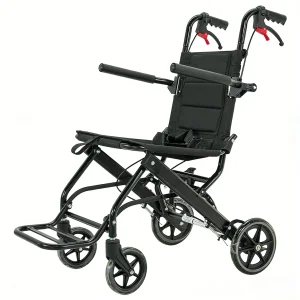
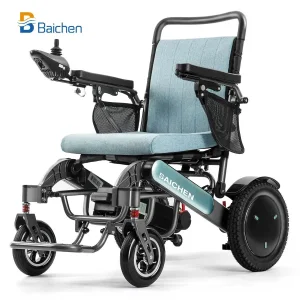
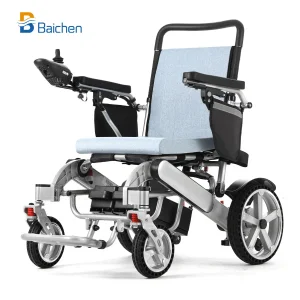
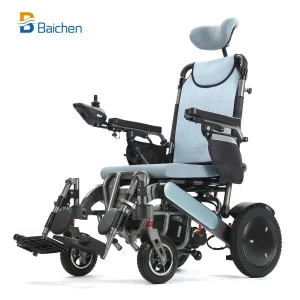
São Paulo stands as the largest economic powerhouse in South America, representing over 12 million inhabitants in its city limits and upwards of 22 million across the metropolitan area. As the population demographics shift, Brazil is experiencing a rapid aging curve. Current projections from the Fundação Sistema Estadual de Análise de Dados (SEADE) indicate that the elderly population within the state of São Paulo will exceed 20% by 2030. This structural shift highlights an immediate demand for advanced medical assistive technologies, specifically designed for travel and high portability.
However, the infrastructure of São Paulo poses complex physical hurdles for mobility device users. The historic quarters of Centro Histórico, Praça da Sé, and parts of Jardins are paved with uneven paralelepípedos (cobblestones). Sidewalk connectivity (calçadas) is often disrupted by steep drainage curves, tree root intrusions, and architectural slopes that exceed standard incline ratings. Consequently, traditional, static heavy-duty wheelchairs fall short. Modern importers and medical distribution chains in São Paulo require lightweight, high-torque, durable travel electric wheelchairs that allow seamless folding for vehicular storage and offer robust shock-absorption to mitigate spinal vibration.
Importing medical and rehabilitation devices into Brazil is governed by a strict regulatory framework managed by the Agência Nacional de Vigilância Sanitária (ANVISA) and the Instituto Nacional de Metrologia, Qualidade e Tecnologia (INMETRO). For a local distributor in São Paulo to successfully clear customs at the Port of Santos or Guarulhos Airport (GRU), the manufacturer must provide thorough documentation validating quality control and safety.
Under the current ANVISA guidelines, electric power wheelchairs are classified as Class II medical devices. This requires the manufacturer to maintain an ISO 13485:2016 Quality Management System. The importer must submit a structured technical dossier containing biocompatibility testing reports, risk management evaluations, and clinical performance data.
Electrical wheelchairs must pass rigorous electromagnetic compatibility (EMC) and mechanical safety tests under standard ABNT NBR IEC 60601-1 and 60601-1-2. Without test reports issued by ILAC-accredited laboratories, obtaining the INMETRO safety certification label is impossible, which is required for custom clearance.
Foshan Muv Wheelchair Co., Ltd. works closely with Brazilian buyers, providing full technical documentation, including test reports for CE, MDR, FDA, CCC, ISO 9001:2008, and ISO 13485:2016. This preparation streamlines the ANVISA registration process and minimizes regulatory barriers for our partners in Latin America.
Modern travel wheelchairs must balance light weight with high structural integrity. Our factory utilizes advanced materials, including 7003-series aerospace-grade aluminum-zinc alloy and high-modulus carbon fiber. The choice of material impacts the device's durability on urban streets and its performance during travel.
| Performance Metrics | 7003 Aerospace Aluminum | High-Modulus Carbon Fiber | Impact on São Paulo Commute |
|---|---|---|---|
| Tensile Strength | Up to 350 MPa | Up to 1500 MPa | Ensures frame durability over cobblestone surfaces. |
| Frame Weight | Approx. 18.5 - 23 kg | Approx. 12.5 - 15 kg | Affects ease of loading into passenger car trunks (e.g., local taxis). |
| Elastic Modulus | 70 GPa | 230 GPa | Reduces frame flex, improving energy transfer and slope climbing. |
| Corrosion Resistance | High (Anodized Treatment) | Immune to chemical corrosion | Resists humidity and salt spray in coastal destinations near São Paulo. |
| Primary Target Application | High-Capacity Daily Use | Multi-Modal Premium Air Travel | Tailors performance to patient lifestyle requirements. |
By utilizing automated robotic welding systems, we ensure consistent welds on our aluminum frames. This process eliminates structural weak points, providing a durable platform that stands up to demanding travel conditions.
Foshan Muv Wheelchair Co., Ltd. operates a 10,000-square-meter facility in China's Guangdong province, the global hub for medical rehabilitation equipment. This geographic placement provides direct access to high-grade raw materials and advanced electronics, allowing us to maintain competitive pricing without compromising quality.
Our facility features automated assembly lines, robotic frame-welding stations, and a dedicated quality testing lab. In this lab, frames undergo structural fatigue testing, and electronic controllers are tested under simulated load conditions. Holding 25 technology patents and 2 software copyrights, we continuously refine our designs to meet the evolving needs of the mobility market.

For B2B importers in Brazil, we offer flexible shipping solutions, including Completely Knocked Down (CKD) and Semi-Knocked Down (SKD) options. These formats allow local assembly partners in industrial hubs like Campinas or ABC Paulista to optimize import duties, manage freight volumes, and meet local market requirements.
A primary concern for travel wheelchair users is compatibility with commercial air travel. International regulations, governed by the International Air Transport Association (IATA) and the International Civil Aviation Organization (ICAO), restrict the transport of lithium-ion batteries due to thermal runaway risks.
Under current guidelines, the capacity of a lithium battery carried in a passenger aircraft cabin must not exceed 300Wh. If the wheelchair requires two batteries for operation, each battery must not exceed 160Wh. Our product range includes flight-compliant configurations, such as dual 24V 6Ah (144Wh) lithium batteries. These setups feature external quick-release mechanisms, allowing users to remove them easily for cabin stowage.
Every battery pack we supply includes a detailed UN38.3 testing report and a Material Safety Data Sheet (MSDS). These documents are essential for validation by airline check-in agents at airports like Guarulhos (GRU) or Congonhas (CGH), ensuring a smooth boarding process for passengers.
Our travel electric wheelchairs are engineered to support users in a variety of typical travel and urban transit environments across the metropolitan area.
Entering high-traffic stations like Consolação or Pinheiros requires compact equipment. Our models feature a tight turning radius (typically under 900 mm), allowing users to navigate elevator cars, fare gates, and platform gaps safely. The brushless motors and responsive joysticks provide precise control, making it easy to board trains during peak travel hours.
São Paulo’s hilly topography features gradients of up to 15 degrees in several neighborhoods. Traditional power wheelchairs risk overheating under sustained loads. Our models utilize dual 250W brushless DC motors coupled with intelligent electromagnetic brakes (EABS). These components provide automatic braking on slopes, ensuring the wheelchair stops safely the moment the joystick is released.
A seamless travel experience relies on quick folding. Our chairs fold down to a compact size in under three seconds. This compact footprint fits easily into standard airport security scanners and luggage compartments, reducing the risk of damage during transit.
Select from our full line of travel models, featuring lightweight folding frames and carbon fiber construction to meet the requirements of your target market.
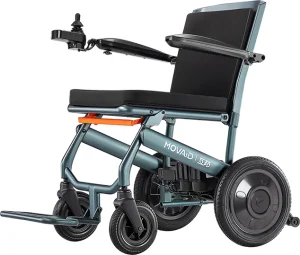
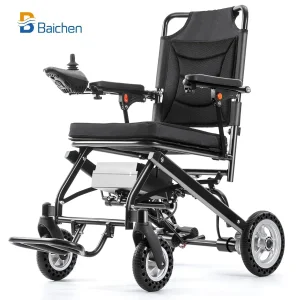
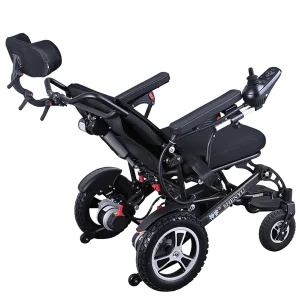
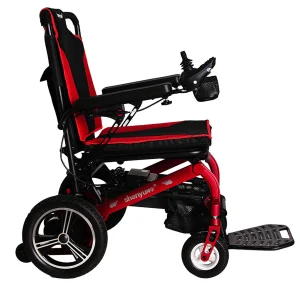
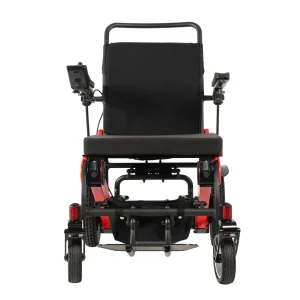
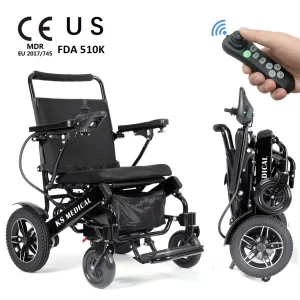
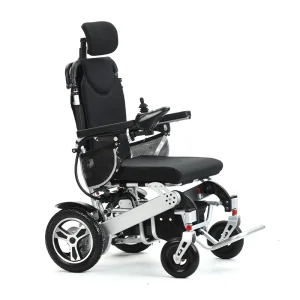
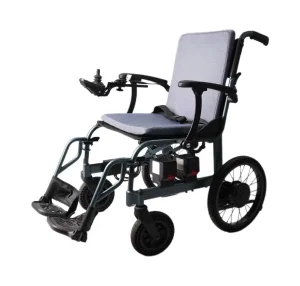
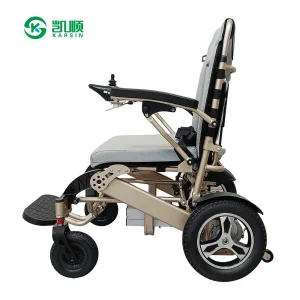
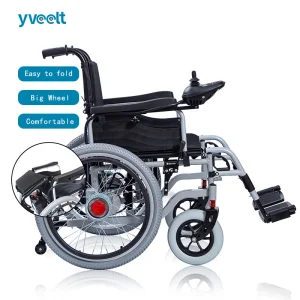
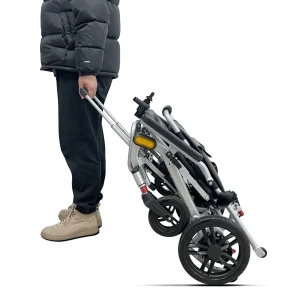
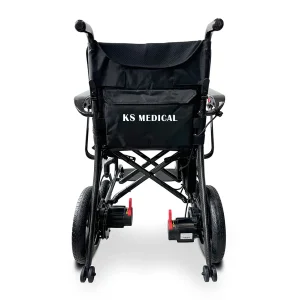
Access competitive factory pricing, comprehensive compliance documentation, and optimized shipping configurations to the Port of Santos. Let us help you expand your product offerings in the Brazilian market.